
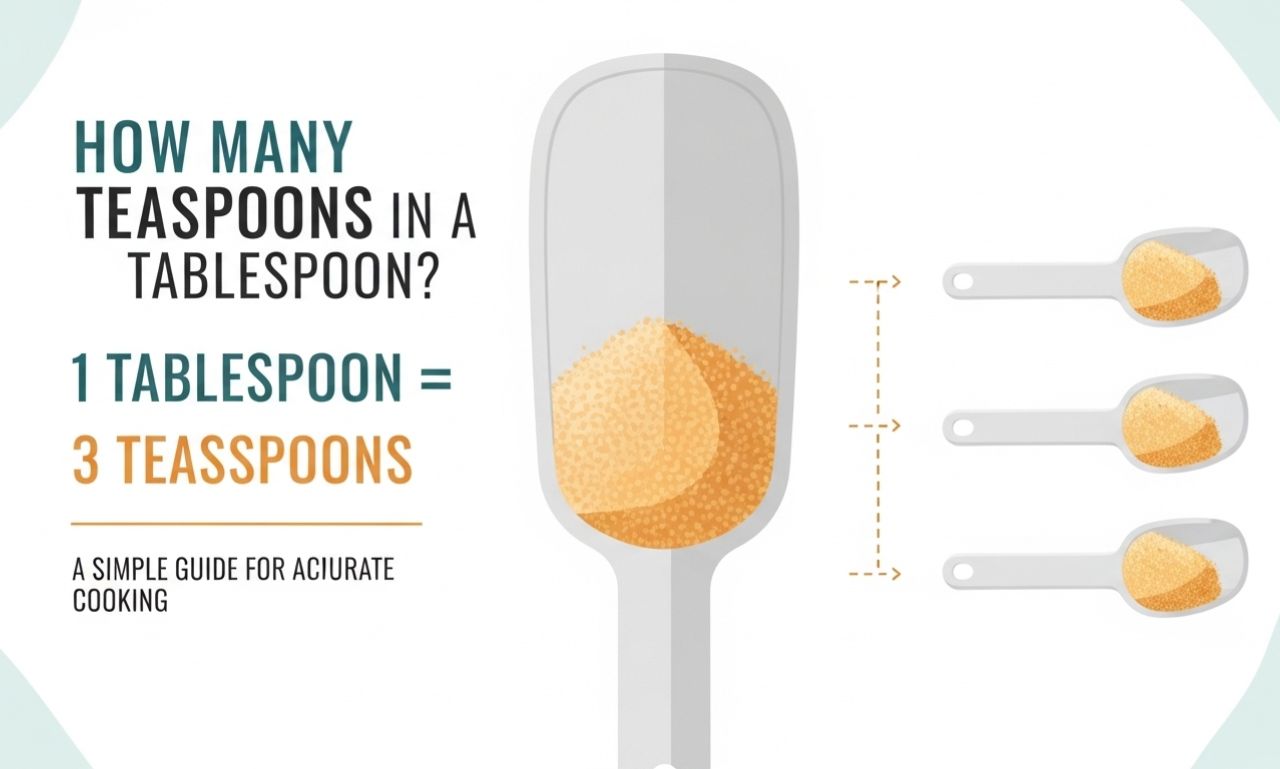
Cooking and baking often require precise measurements to ensure recipes turn out perfectly. One of the most common questions in kitchens worldwide is: how many teaspoons in a tablespoon? Understanding this simple conversion can help both amateur cooks and professional chefs measure ingredients accurately, avoid mistakes, and improve the consistency of dishes. In this guide, we will explore the standard conversions, practical examples, and tips to make measuring ingredients easy.
Standard Conversion: Teaspoons to Tablespoons
The Basic Measurement
The standard conversion between teaspoons and tablespoons is:
1 tablespoon = 3 teaspoons
This means that whenever a recipe calls for a tablespoon of an ingredient, you can measure it using three teaspoons.
Why This Conversion Matters
Knowing how many teaspoons in a tablespoon is essential for:
-
Scaling recipes up or down
-
Measuring ingredients when utensils are limited
-
Ensuring accurate baking results, where precision is critical
Converting Tablespoons to Teaspoons
Step-by-Step Guide
-
Determine the number of tablespoons in your recipe.
-
Multiply the number of tablespoons by 3.
-
The result is the equivalent number of teaspoons.
Example:
-
2 tablespoons × 3 = 6 teaspoons
-
5 tablespoons × 3 = 15 teaspoons
This method works for both liquid and dry ingredients.
Quick Reference Table
| Tablespoons (tbsp) | Teaspoons (tsp) |
|---|---|
| 1 | 3 |
| 2 | 6 |
| 3 | 9 |
| 4 | 12 |
| 5 | 15 |
| 6 | 18 |
Converting Teaspoons to Tablespoons
Sometimes, recipes give teaspoons and you want to know how many tablespoons they equal. Use this simple formula:
Tablespoons = Teaspoons ÷ 3
Example:
-
9 teaspoons ÷ 3 = 3 tablespoons
-
12 teaspoons ÷ 3 = 4 tablespoons
This is especially useful for small-scale recipes or adjusting seasoning amounts.
Practical Applications in Cooking
Baking
Precision is critical in baking. Knowing how many teaspoons in a tablespoon helps when measuring:
-
Baking powder or soda
-
Salt
-
Extracts like vanilla or almond
Accurate measurements ensure baked goods rise correctly and taste as intended.
Cooking and Sauces
In everyday cooking, this conversion is helpful for:
-
Spices and herbs
-
Oils and vinegar
-
Dressings and marinades
Measuring correctly prevents overly strong or weak flavors.
Substitutions
If a recipe calls for tablespoons but you only have teaspoons, simply multiply by 3. Conversely, divide teaspoons by 3 to substitute with tablespoons. This flexibility is key in improvising when kitchen tools are limited.
Tips for Accurate Measurement
-
Level Your Spoon – Use a flat edge to level teaspoons and tablespoons, ensuring correct quantity.
-
Use Proper Tools – Measuring spoons are standardized; avoid using regular cutlery for accuracy.
-
Check for Density – Ingredients like flour or sugar can be packed differently; spoon lightly unless the recipe specifies otherwise.
Common Mistakes
Confusing Teaspoons and Tablespoons
Mixing teaspoons and tablespoons is a frequent error. Remember: 1 tablespoon = 3 teaspoons.
Overfilling Spoons
Filling a teaspoon or tablespoon to the top without leveling can lead to inaccurate measurements, especially in baking.
Ignoring Metric Conversions
In some countries, tablespoons and teaspoons are metric-based:
-
1 metric tablespoon = 15 ml
-
1 metric teaspoon = 5 ml
This still maintains the 3:1 ratio, but it’s good to check when using international recipes.
Conclusion:
Knowing how many teaspoons in a tablespoon is a small but essential kitchen skill. Whether baking, cooking, or improvising, understanding this conversion ensures precise ingredient measurements and better results. Remember: 1 tablespoon = 3 teaspoons, and you can apply this rule in any situation to measure accurately, scale recipes, or substitute ingredients.