
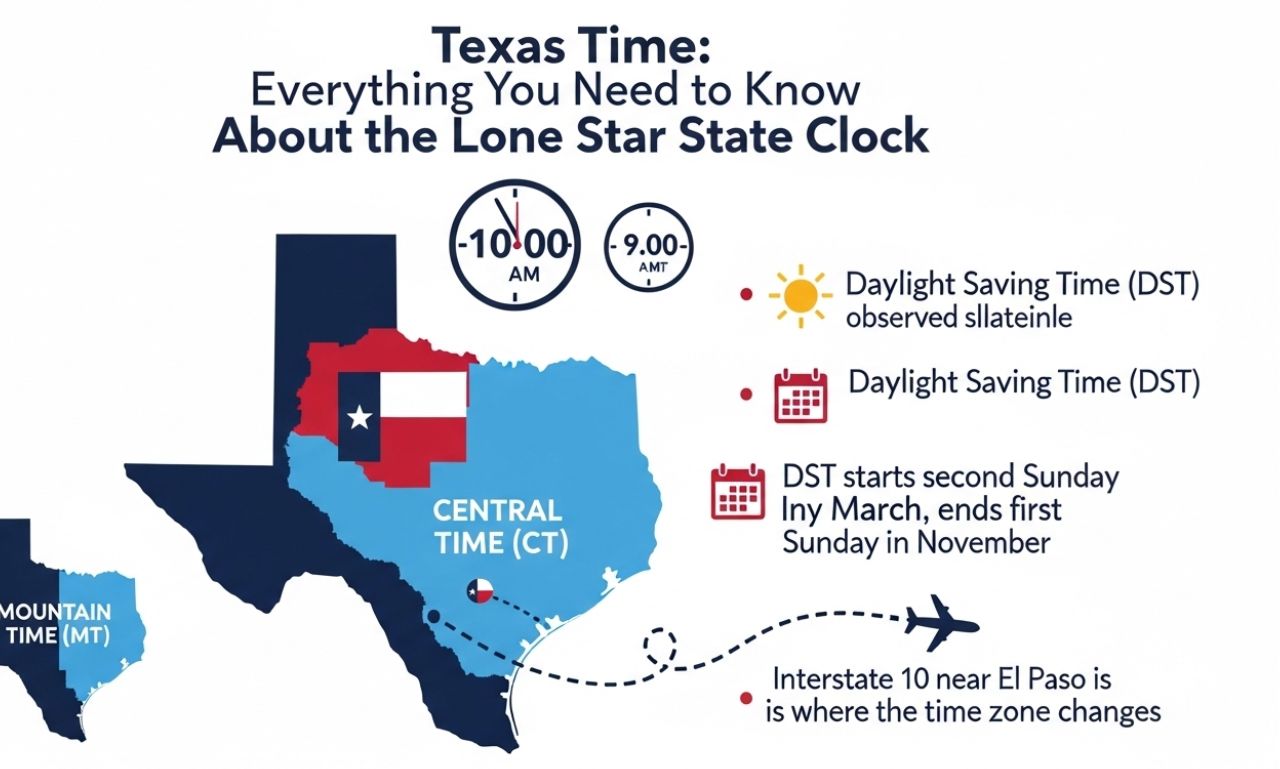
Texas time refers to the official local time observed in the state of Texas, a crucial detail for residents, travelers, and businesses alike. Texas is a vast state that spans more than one time zone, meaning understanding Texas time is essential for scheduling appointments, planning travel, and coordinating with other regions. In this article, we explore the history of timekeeping in Texas, its time zones, daylight saving practices, and practical tips to manage time effectively in the state.
Understanding Texas Time Zones
Central Time Zone (CT)
Most of Texas observes Central Time (CT). This includes major cities such as:
-
Houston
-
Dallas
-
Austin
-
San Antonio
Central Time is 6 hours behind Coordinated Universal Time (UTC−6) during standard time and 5 hours behind (UTC−5) during daylight saving time. This zone covers approximately 80% of the state, making it the most commonly used Texas time.
Mountain Time Zone (MT)
A smaller portion of western Texas observes Mountain Time (MT), including:
-
El Paso
-
Hudspeth County
Mountain Time is 7 hours behind UTC (UTC−7) during standard time and 6 hours behind (UTC−6) during daylight saving time. Residents in this region must remember that their Texas time is one hour behind most of the state.
Daylight Saving Time in Texas
Texas follows the Daylight Saving Time (DST) schedule like most U.S. states, advancing clocks by one hour in spring and moving them back in fall.
-
Start of DST: Second Sunday in March
-
End of DST: First Sunday in November
During DST, Central Time becomes Central Daylight Time (CDT), and Mountain Time becomes Mountain Daylight Time (MDT). This shift helps extend evening daylight, which can be particularly useful for outdoor activities and energy savings.
Historical Context
Before time zones were standardized, towns across Texas used local solar time, which meant that clocks were set according to the position of the sun. This system caused confusion for railroads and interstate communication, prompting the adoption of standard time zones in the late 19th century. Today, the Central and Mountain Time zones ensure consistency for travel, business, and broadcasting schedules.
How Texas Time Affects Daily Life
Businesses and Work Schedules
Businesses operating in Texas need to account for the different time zones, especially if they interact with other states or regions within Texas. Meetings scheduled in Tex as ti me often specify CT or MT to avoid confusion. For remote workers or those traveling across the state, being aware of local time is essential.
Travel and Transportation
Airlines, buses, and trains provide schedules based on Tex as tim e, adjusted to the local time zone of departure and arrival cities. For instance, a flight from El Paso (MT) to Dallas (CT) requires travelers to account for the one-hour difference in Tex as t ime.
Television and Media
Television networks and media outlets broadcast shows according to Te xas tim e. Most programming in Central Time cities follows CT schedules, while western regions adjust according to MT. Awareness of these differences is crucial for viewers wanting to watch live events or sports broadcasts.
Tools to Keep Track
Online Clocks and Apps
There are multiple online tools and mobile apps that display Tex as ti me, both for Central and Mountain zones. These tools allow users to:
-
Convert between time zones
-
Set alarms and reminders according to local T exas ti me
-
Check daylight saving adjustments automatically
Smart Devices
Smartphones, computers, and smartwatches automatically adjust to Texa s tim e when location services are enabled, making it easier to stay on schedule while traveling within the state.
Calendar Integration
Digital calendars such as Google Calendar or Outlook allow users to specify time zones. This ensures that appointments reflect the correct Tex as ti me, even when scheduling across time zones.
Fun Facts About Texas Time
-
Texas is the second-largest U.S. state, so traveling from El Paso to Houston can result in crossing a time zone.
-
Some Texans jokingly call the time difference in western counties “El Paso Time” versus “Houston Time,” reflecting cultural as well as geographic distinctions.
-
Events like the Houston Livestock Show & Rodeo or state fairs in Dallas often publish schedules based on Central Time, even for attendees traveling from Mountain Time areas.
Tips for Managing Texas Time
-
Know Your Time Zone: Confirm whether your city is in CT or MT.
-
Plan Travel Ahead: Account for the one-hour difference when booking flights or appointments.
-
Use Technology: Apps and smart devices can prevent confusion during DST changes.
-
Double-Check Event Times: Especially when coordinating across zones, clarify whether the schedule uses CT or MT.
-
Communicate Clearly: Businesses should specify time zones in emails or announcements to avoid misunderstandings.
Conclusion
Tex as tim e is more than just a clock on the wall — it’s a vital element of daily life in the Lone Star State. With most of the state observing Central Time and a smaller region using Mountain Time, understanding local time zones and daylight saving changes is essential for travelers, residents, and businesses. By using online tools, smart devices, and careful planning, anyone can navigate Texa s tim e confidently and avoid scheduling pitfalls. Whether coordinating meetings, catching a live broadcast, or simply planning a trip, knowing the ins and outs of Tex as ti me ensures that you’re always on schedule in one of America’s most dynamic states.