
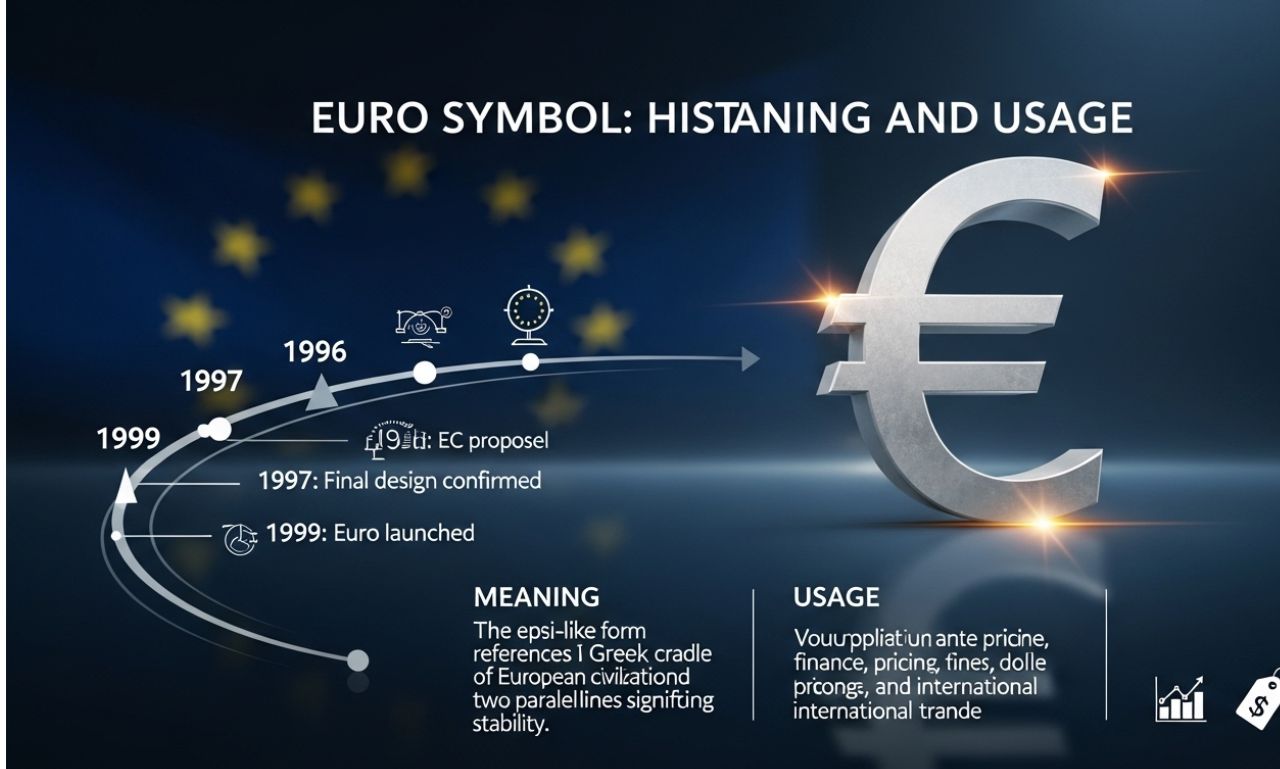
The Euro Symbol (€) is the official sign representing the euro, the currency used by 20 of the 27 European Union countries. The euro is one of the most widely recognized and traded currencies globally, and the Euro Symbol itself has become a symbol of European economic unity and stability. Understanding the origin, design, and usage of the Euro Symbol is essential for anyone involved in finance, commerce, or international trade.
The History of the Euro Symbol (€)
Introduction of the Euro Currency
The euro was introduced in 1999 as an electronic currency for banking and accounting purposes, and euro banknotes and coins entered circulation in 2002. With this introduction, the need for a distinctive symbol to represent the new currency became essential.
Design and Selection of the Symbol
The Euro Symbol (€) was designed to be:
-
Simple and recognizable – easy to print and type
-
Inspired by Europe – resembling the letter ‘E’ for Europe
-
Stable and authoritative – two parallel horizontal lines indicate stability
The European Commission selected the final design after reviewing multiple proposals. The symbol was publicly unveiled in 1996 and quickly became associated with the euro currency.
Meaning and Significance of the Euro Symbol
Representation of European Unity
The Euro Symbol (€) represents economic cohesion among European Union member states. Its design reflects Europe’s shared identity and financial collaboration.
Indication of Stability
The two horizontal lines in the Euro Sy mbol signify financial stability and balance, reinforcing the credibility of the euro as a reliable currency in global markets.
Global Recognition
Over the years, the Euro Sy mbol (€) has become instantly recognizable worldwide. It is often used in international trade, stock markets, online transactions, and financial news to indicate euro-denominated values.
How to Type the Euro Symbol (€)
On Windows
-
Keyboard shortcut: Press
Alt+0128on the numeric keypad. -
Alternative: Use
Ctrl+Alt+Eon some layouts.
On Mac
-
Press
Option+Shift+2to insert the Euro Sy mbol (€).
On Mobile Devices
-
On smartphones and tablets, press and hold the
$or currency key to access the Euro Sy mbol (€).
HTML and Unicode
-
HTML code:
€ -
Unicode:
U+20AC
This ensures the Euro Symbol can be used in websites, documents, and digital communications worldwide.
Usage of the in Finance and Commerce
In Pricing and Invoices
The Euro Sy mbol (€) is commonly placed before or after the numeric amount, depending on the country. For example:
-
€50 (used in most EU countries)
-
50 € (used in some European countries)
It appears on receipts, price tags, online shopping carts, and invoices.
In International Transactions
Global businesses use the Euro Sy mbol (€) in financial statements, bank transfers, and currency conversions. This ensures clarity and prevents confusion with other currencies, such as the US dollar ($) or British pound (£).
In Stock Markets and Forex Trading
The Euro Symbol (€) is a standard reference in forex trading and stock exchanges. Currency pairs, such as EUR/USD, indicate the euro versus the US dollar, helping traders and investors monitor exchange rates.
Euro Symbol in Digital Communication
In Word Processing
Most word processors allow easy insertion of the Euro Sy mbol (€) through symbol menus or keyboard shortcuts. It is commonly used in reports, presentations, and financial documents.
In Websites and E-Commerce
E-commerce platforms like Amazon, eBay, and Shopify display prices with the Euro Sy mbol (€) to inform European customers about local pricing. Proper HTML or Unicode ensures the symbol appears correctly across devices and browsers.
In Emails and Messaging
When discussing pricing or financial matters with clients, the Euro Sy mbol (€) is used to indicate amounts in euros, making communication precise and professional.
Interesting Facts About the Euro Symbol (€)
-
The Euro Sy mbol (€) is one of the few currency symbols designed specifically in the late 20th century for a new currency.
-
The design reflects European unity, with the two lines symbolizing the stability of the euro.
-
It is used by over 340 million people in 20 European countries as their official currency.
-
Many countries outside the EU also reference the Euro Sy mbol (€) for international trade and financial reporting.
Conclusion:
The Euro Sy mbol (€) is more than just a currency sign; it represents European unity, economic stability, and global financial presence. Its recognition in international markets highlights the euro’s importance as a major global currency.
Whether you are typing financial reports, making international transactions, designing e-commerce platforms, or simply learning about currencies, understanding the Euro Sy mbol (€) and its usage is essential. The symbol not only conveys monetary value but also stands as a mark of stability and collaboration among European nations.