Arsenal F.C. is one of the most iconic and successful football clubs in the world. Based in North London, Arsenal Football Club has a rich history that spans more than a century. Known for its attacking style of play, strong youth development, and loyal fanbase, Arsenal F.C. has played a major role in shaping English and global football.
From domestic league triumphs to unforgettable European nights, Arsenal F.C. continues to be a symbol of tradition, ambition, and modern football excellence.
History of Arsenal F.C.
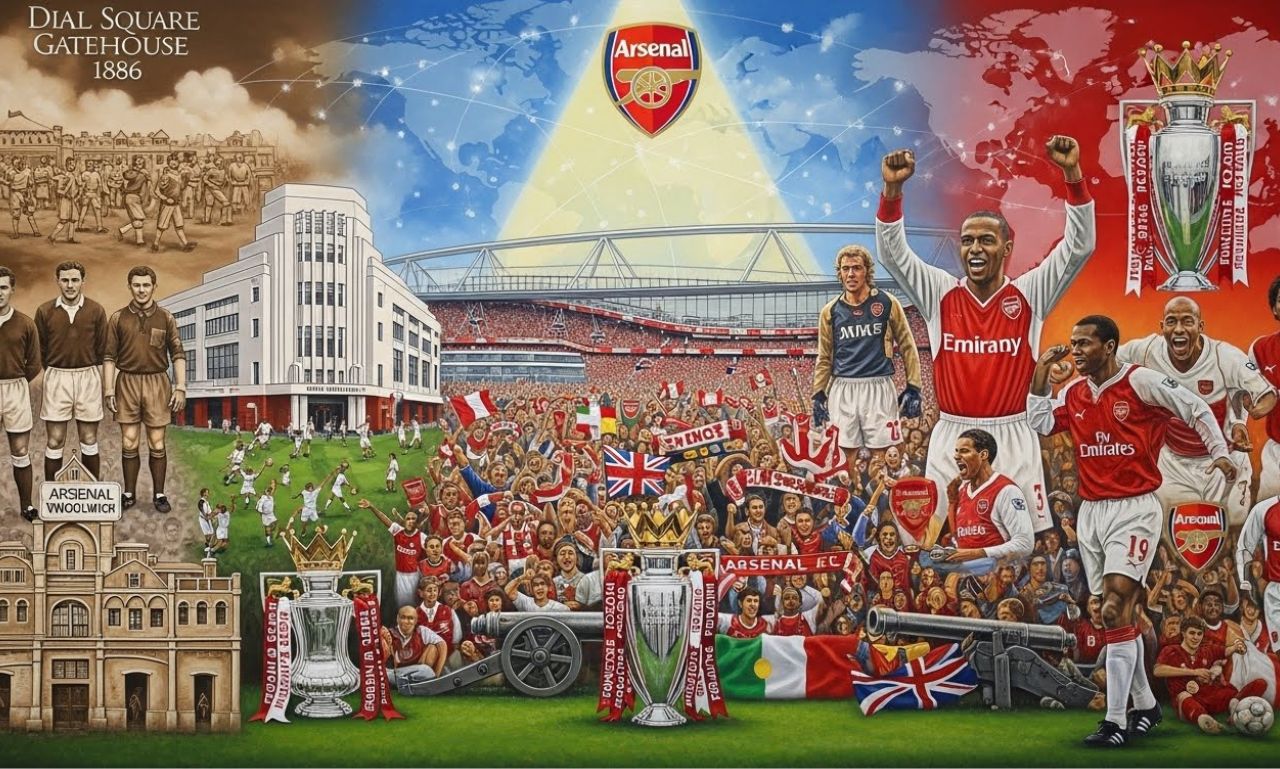
Arsenal F. C. was founded in 1886 as Dial Square by workers at the Royal Arsenal in Woolwich. The club later changed its name to Woolwich Arsenal before becoming simply Arsenal F. C. In 1913, the club moved to Highbury in North London, a decision that would shape its identity forever.
Arsenal became the first club from the South of England to join the Football League in 1893. Under legendary manager Herbert Chapman in the 1930s, Arsenal F.C. rose to dominance, winning multiple league titles and setting new standards in English football.
Arsenal F.C. Stadium: From Highbury to Emirates
Highbury Era
Highbury was Arsenal’s home ground from 1913 to 2006. It became famous for its intimate atmosphere and iconic architecture. Many of Arsenal F. C.’s greatest moments were witnessed at Highbury, making it a cherished part of club history.
Emirates Stadium
In 2006, Arsenal F. C. moved to the Emirates Stadium, a modern venue with a capacity of over 60,000. The stadium symbolizes Arsenal’s ambition to compete at the highest level while providing world-class facilities for players and fans.
Major Trophies and Achievements
Arsenal F. C. is one of the most decorated clubs in English football history.
Domestic Success
-
Premier League / First Division Titles: 13
-
FA Cups: 14 (record holders)
-
League Cups: 2
-
Community Shields: Multiple titles
European Competitions
-
UEFA Cup Winners’ Cup (1994)
-
UEFA Champions League Finalists (2006)
One of Arsenal F. C.’s greatest achievements came during the 2003–04 season, when the team went unbeaten in the Premier League, earning the famous nickname “The Invincibles.”
Legendary Managers of Arsenal F.C.
Herbert Chapman
Chapman revolutionized English football with tactical innovations and professionalism. His influence laid the foundation for Arsenal F. C.’s long-term success.
Arsène Wenger
Arsène Wenger is the most influential manager in Arsenal F. C. history. Appointed in 1996, Wenger transformed the club with a focus on fitness, nutrition, youth development, and attractive football. Under his leadership, Arsenal won:
-
3 Premier League titles
-
7 FA Cups
Wenger’s philosophy and legacy remain deeply embedded in the club’s identity.
Iconic Arsenal F.C. Players
Arsenal F. C. has been home to many legendary players:
-
Thierry Henry: Arsenal’s all-time top scorer and club icon
-
Dennis Bergkamp: Known for creativity and technical brilliance
-
Patrick Vieira: Dominant midfielder and leader
-
Tony Adams: One-club man and defensive legend
-
Robert Pirès: Key figure in the Invincibles era
These players helped define Arsenal F. C.’s attacking style and competitive spirit.
Arsenal F.C. Playing Style and Philosophy
Arsenal F. C. is traditionally associated with:
-
Attacking football
-
Quick passing and movement
-
Youth development
-
Technical excellence
The club has consistently emphasized developing young talent through its academy, producing stars who contribute both on and off the pitch.
Arsenal F.C. Rivalries
North London Derby
The rivalry between Arsenal F. C. and Tottenham Hotspur is one of the fiercest in football. Known as the North London Derby, these matches are intense, emotional, and highly anticipated by fans worldwide.
Other Rivalries
-
Manchester United
-
Chelsea
-
Liverpool
These rivalries have produced some of the most memorable moments in English football history.
Global Fanbase and Cultural Impact
Arsenal F. C. has a massive global following, with millions of supporters across Europe, Asia, Africa, and the Americas. The club’s values of tradition, class, and attacking football have helped it build a strong international brand.
Through community programs, charity initiatives, and youth development projects, Arsenal F. C. continues to make a positive social impact beyond football.
Modern Era and Future Vision
In recent years, Arsenal F.C. has focused on rebuilding and returning to the top of English and European football. With a mix of experienced players and exciting young talent, the club aims to compete consistently for major trophies.
Investment in youth development, modern coaching methods, and data-driven recruitment reflects Arsenal F.C.’s long-term vision for success.
Conclusion
Arsenal F.C. is more than just a football club—it is a symbol of history, innovation, and passion. With a legacy built on trophies, legendary players, and a distinctive style of play, Arsenal continues to inspire fans around the world.
As the club looks toward the future, Arsenal F.C. remains committed to its core values while striving to reclaim its place among football’s elite. Whether through unforgettable victories or thrilling performances, Arsenal F.C.’s story is one of pride, resilience, and ambition.