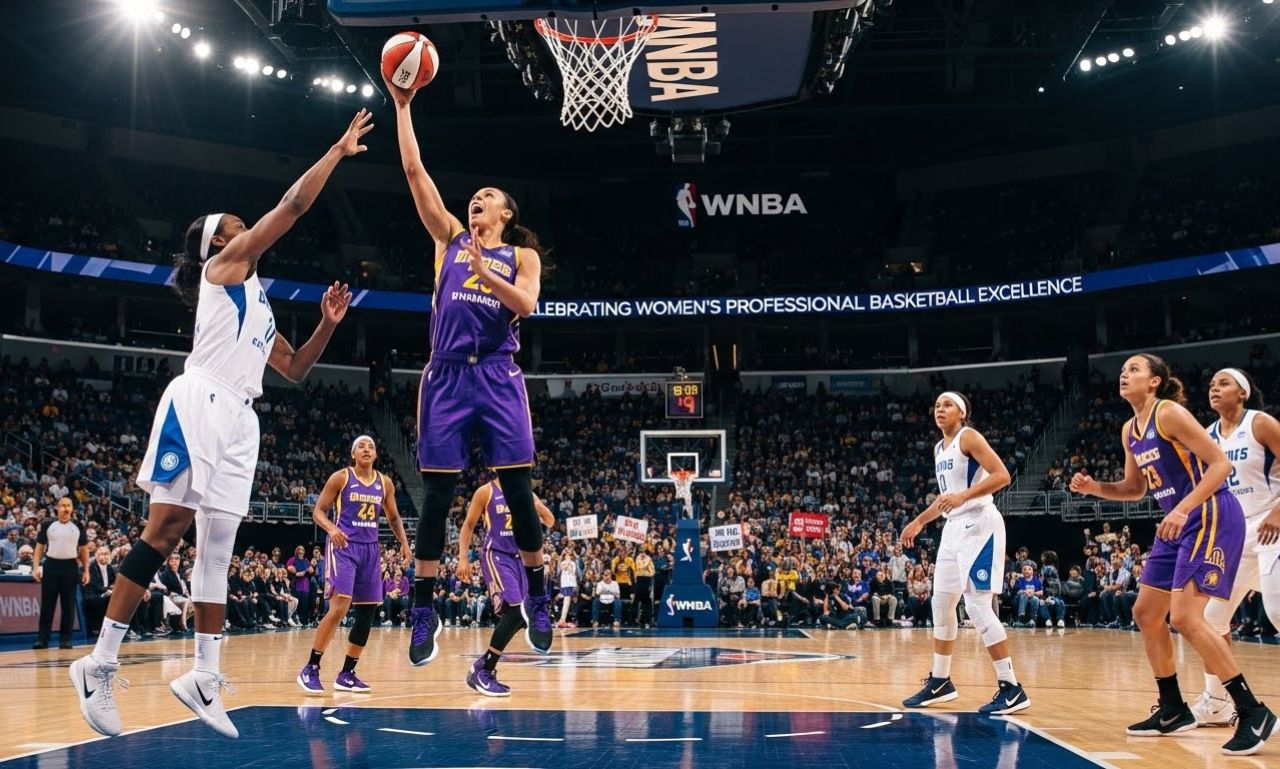
The WNBA (Women’s National Basketball Association) is the premier professional basketball league for women in the United States. Since its founding in 1996, the WNBA has provided a platform for elite female athletes to showcase their talent, inspire future generations, and elevate the popularity of women’s basketball worldwide.
This article explores the history, structure, teams, players, and impact of the WNBA, highlighting its role in sports and society.
History of the WNBA
The WNBA was established by the National Basketball Association (NBA) in 1996 and began play in 1997. Its creation aimed to provide a professional league for women athletes in the U.S., following the rising popularity of women’s college basketball.
-
Inaugural Season (1997): Featured eight teams and quickly gained attention for its high skill level.
-
Expansion: Over the years, the league expanded to 12 teams, reflecting growing interest and support.
-
Milestones: Iconic players like Lisa Leslie, Sheryl Swoopes, and Diana Taurasi have defined the league and inspired generations.
WNBA Teams
The league currently consists of 12 teams divided into Eastern and Western Conferences:
Eastern Conference:
-
Atlanta Dream
-
Chicago Sky
-
Connecticut Sun
-
Indiana Fever
-
New York Liberty
-
Washington Mystics
Western Conference:
-
Dallas Wings
-
Las Vegas Aces
-
Los Angeles Sparks
-
Minnesota Lynx
-
Phoenix Mercury
-
Seattle Storm
Each team competes in a regular season, followed by playoffs, culminating in the WNBA Finals to crown the league champion.
Notable WNBA Players
The WNBA has produced some of the greatest female basketball players in history:
-
Diana Taurasi: Known as “The White Mamba,” Taurasi is celebrated for her scoring ability and leadership.
-
Sue Bird: A legendary point guard with multiple championships and Olympic gold medals.
-
Candace Parker: Recognized for her versatility, skill, and impact on the game.
-
Breanna Stewart: A rising star known for her scoring, rebounding, and defensive prowess.
These athletes have not only excelled on the court but also become role models and advocates for women’s sports globally.
WNBA Season Structure
1. Regular Season
The WNBA regular season typically runs from May to September. Each team plays 36 games, competing within and across conferences to qualify for the playoffs.
2. Playoffs
The playoffs consist of a series of elimination rounds, including single-elimination games for lower seeds and best-of-five series for semifinals and finals. This format ensures excitement and high-stakes competition.
3. WNBA Finals
The Finals determine the league champion. Over the years, teams like the Minnesota Lynx, Seattle Storm, and Los Angeles Sparks have dominated, setting high standards for excellence.
WNBA Achievements and Impact
1. Promoting Women’s Sports
The WNBA has been instrumental in advancing women’s professional sports, inspiring young athletes, and providing a platform for female empowerment.
2. Global Influence
Many WNBA players compete internationally during the offseason, promoting basketball in countries like Russia, Turkey, and China, while attracting global fans.
3. Social Advocacy
The league and its players are known for championing social justice, equality, and community initiatives, using their visibility to drive positive change.
4. Record-Breaking Performances
From individual scoring records to championship streaks, the WNBA consistently showcases elite talent and thrilling competition, raising the standard of women’s basketball.
WNBA Rules and Style of Play
While the WNBA follows standard basketball rules similar to the NBA, there are some distinctions:
-
Game Duration: 40 minutes (four 10-minute quarters).
-
Three-Point Line: Slightly closer than in the NBA.
-
Shot Clock: 24 seconds per possession.
-
Play Style: Emphasizes teamwork, fundamentals, and strategic ball movement.
These rules create a fast-paced, competitive, and exciting basketball environment for fans.
Challenges and Growth
Despite its success, the WNBA faces challenges:
-
Media Coverage: While improving, women’s basketball still receives less broadcast attention than men’s leagues.
-
Salaries: WNBA player salaries are significantly lower than NBA counterparts, though recent agreements have improved compensation.
-
Fan Engagement: Efforts continue to expand fan bases, attendance, and merchandising.
However, the league’s growth, star power, and increasing sponsorships show promising trends for the future.
Future of the WNBA
The WNBA continues to evolve:
-
Expansion: New teams may join as interest grows in untapped markets.
-
Global Reach: Collaborations with international leagues and tournaments increase worldwide recognition.
-
Technology Integration: Streaming, social media, and digital content help connect with fans and expand viewership.
-
Youth Development: Grassroots programs and academies aim to nurture the next generation of female basketball stars.
Conclusion
The WN BA represents more than just professional basketball—it symbolizes empowerment, talent, and progress for women in sports. With its rich history, talented players, and growing global influence, the WN BA continues to inspire millions, proving that women’s basketball can thrive on the world stage.
As the league grows, fans can look forward to more exciting games, iconic performances, and lasting impact on both sports and society.