Tempura is one of Japan’s most iconic and beloved dishes, renowned for its light, crispy texture and delicate flavors. Often associated with Japanese cuisine worldwide, tempura has a rich history, diverse varieties, and a unique preparation method that sets it apart from other fried foods. From seafood to vegetables, tempura combines simplicity and elegance, making it a staple in Japanese restaurants and homes alike.
What Is Tempura?
Tempura is a Japanese dish made by lightly battering ingredients—typically seafood or vegetables—and deep-frying them to achieve a crisp, airy coating. Unlike Western-style fried foods, tempura batter is very light and does not overwhelm the flavor of the main ingredient. The result is a dish that is both delicate and flavorful.
Tempura is often served with a dipping sauce called tentsuyu, made from dashi, mirin, and soy sauce, or simply with a sprinkle of salt. It can be enjoyed as a standalone dish, part of a meal set, or atop bowls of rice or noodles.
The History of Tempura
The origins of tempura in Japan date back to the 16th century when Portuguese missionaries and traders introduced frying techniques to Japanese cooks. The term “tempura” is derived from the Latin word “tempora,” which refers to times of fasting when meat was avoided.
Japanese chefs adapted this frying method, emphasizing light batter and fresh ingredients. Over centuries, tempura evolved into a distinctly Japanese dish, now recognized worldwide. Edo-period Tokyo (formerly Edo) saw the rise of tempura as a street food, making it accessible to common people and a favorite in Japanese cuisine.
Common Tempura Ingredients
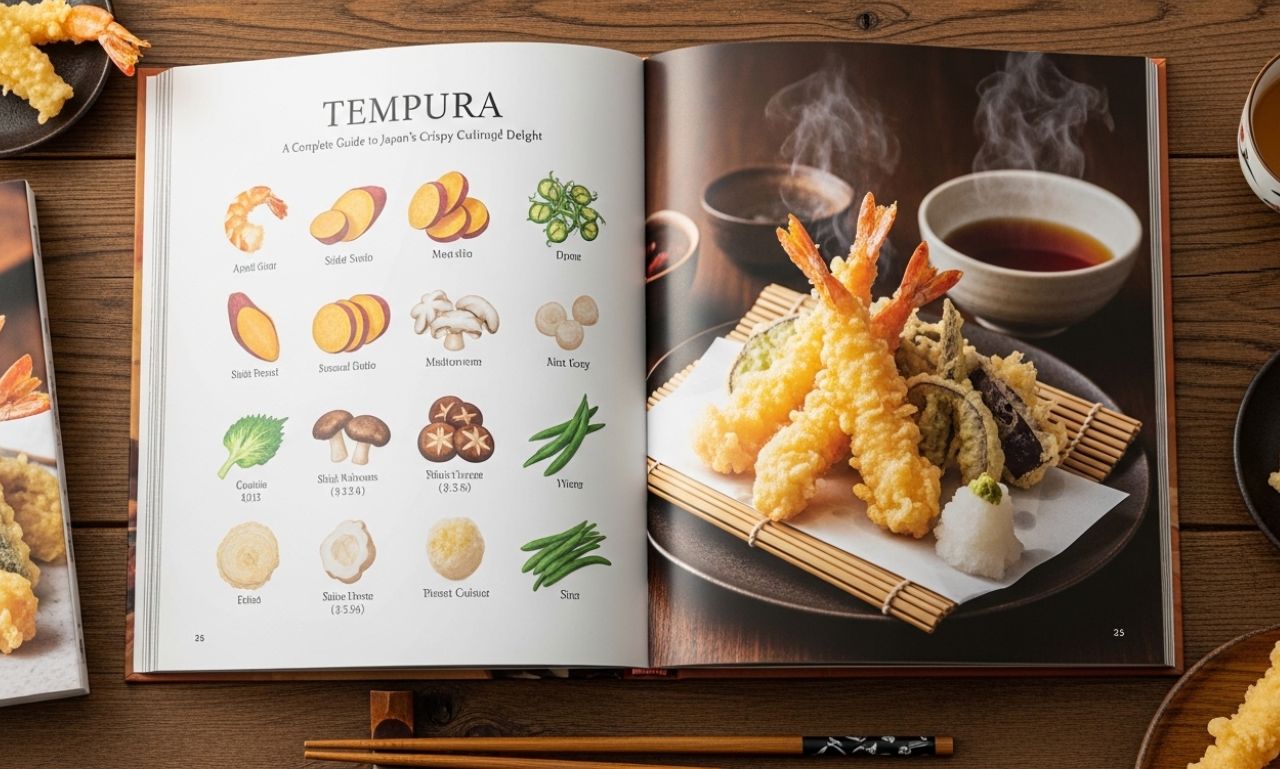
Tempura can be made from a wide variety of ingredients, each offering unique flavors and textures. Popular choices include:
Seafood Tempura
- Shrimp (Ebi): The most iconic tempura ingredient, known for its sweet and tender flesh.
- White Fish: Varieties like cod or sea bass are lightly battered and fried.
- Squid and Scallops: Offer a chewy texture that contrasts with the crisp batter.
Vegetable Tempura
- Sweet Potato (Satsumaimo): Naturally sweet and soft inside the crispy coating.
- Pumpkin (Kabocha): Adds a creamy texture and mild flavor.
- Eggplant (Nasu): Soft and slightly spongy, absorbing the batter well.
- Green Beans, Carrots, and Mushrooms: Commonly used for variety and color.
How Tempura Is Made
The key to excellent tempura lies in its preparation and technique. Ingredients are first cleaned, peeled, or cut into uniform sizes to ensure even cooking. The batter is made from cold water, flour, and sometimes egg, and is mixed lightly to avoid gluten formation, keeping it airy and light.
The oil must be at the correct temperature, usually around 170–180°C (340–360°F), to ensure the batter cooks quickly without absorbing excess oil. Ingredients are fried in small batches, maintaining crispness and preventing overcrowding in the pan.
Tempura is typically served immediately after frying to preserve its delicate texture. Some variations may be lightly sprinkled with salt or paired with a dipping sauce to enhance flavor.
Nutritional Value of Tempura
Tempura can be a balanced meal if prepared thoughtfully. Seafood tempura provides protein and omega-3 fatty acids, while vegetables contribute vitamins, minerals, and fiber. The light batter and brief frying reduce oil absorption compared to heavier fried foods.
However, tem pura is still a fried dish, so moderation is key. Serving tem pura with steamed rice, miso soup, and fresh vegetables can create a balanced and satisfying meal.
Tempura Dining Culture
Tem pura is enjoyed in a variety of settings, from casual eateries to high-end restaurants. Specialty tem pura restaurants, known as “tem pura-ya,” often serve each piece individually, highlighting freshness and presentation.
In Japanese cuisine, tem pura is appreciated not only for taste but also for aesthetics. The golden, crisp exterior and carefully arranged ingredients reflect the Japanese value of visual appeal in food.
Tempura vs Other Fried Foods
Unlike Western fried foods, tem pura emphasizes lightness and subtlety. The batter is minimal, the frying time is short, and the focus is on the natural flavors of the ingredients. This makes tem pura more delicate and less greasy compared to deep-fried dishes like tem pura-style fried chicken or French fries.
Modern Variations
Today, tem pura has inspired many creative variations both in Japan and internationally. Tem pura tacos, tem pura sushi rolls, and tem pura sandwiches are modern interpretations that combine Japanese techniques with local flavors. Vegetable tem pura platters and mixed seafood tem pura sets are popular in Japanese restaurants worldwide.
These innovations make tem pura accessible to different tastes while preserving the essence of its traditional preparation.
Why Remains Popular
Tem pura’s enduring popularity comes from its balance of texture, flavor, and simplicity. The light, crispy batter enhances natural ingredients without overpowering them. Its visual appeal, versatility, and ability to pair with various dishes make it a favorite in Japanese cuisine.
Furthermore, tem pura fits modern dining trends, offering a lighter alternative to heavy fried foods. Its adaptability ensures it remains relevant in both traditional and contemporary culinary contexts.
Conclusion
Tem pura is more than a fried dish; it is a symbol of Japanese culinary art, blending technique, freshness, and simplicity. From its historical roots to modern innovations, tem pura continues to delight food lovers around the world. Whether enjoyed at a specialty restaurant, home-cooked, or incorporated into fusion dishes, tem pura exemplifies the elegance and creativity of Japanese cuisine.